RAP SYSTEMS
USB HART Modem (HM1-UD)
USB HART Modem (HM1-UD)
Buying for a company? We'll send a formal quote to raise your purchase order against. Pay by card or bank transfer. We reply within one working day.
Couldn't load pickup availability
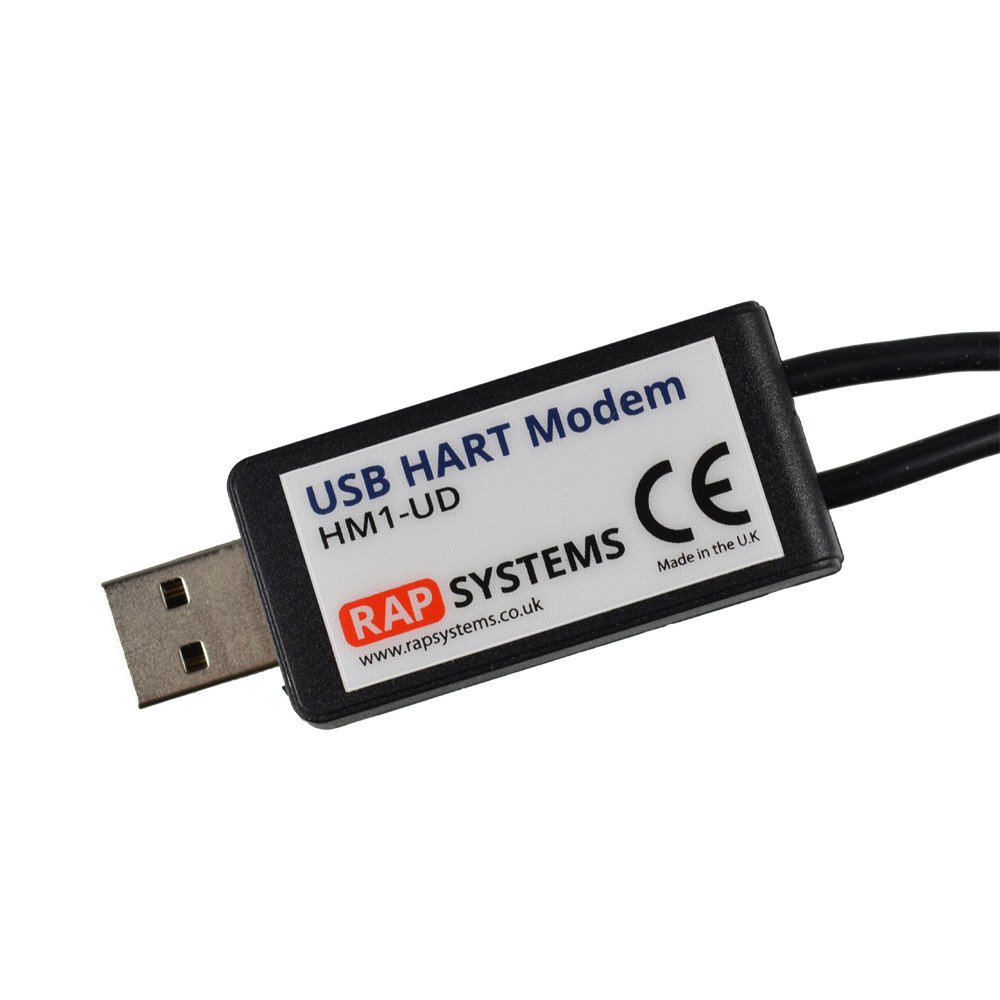
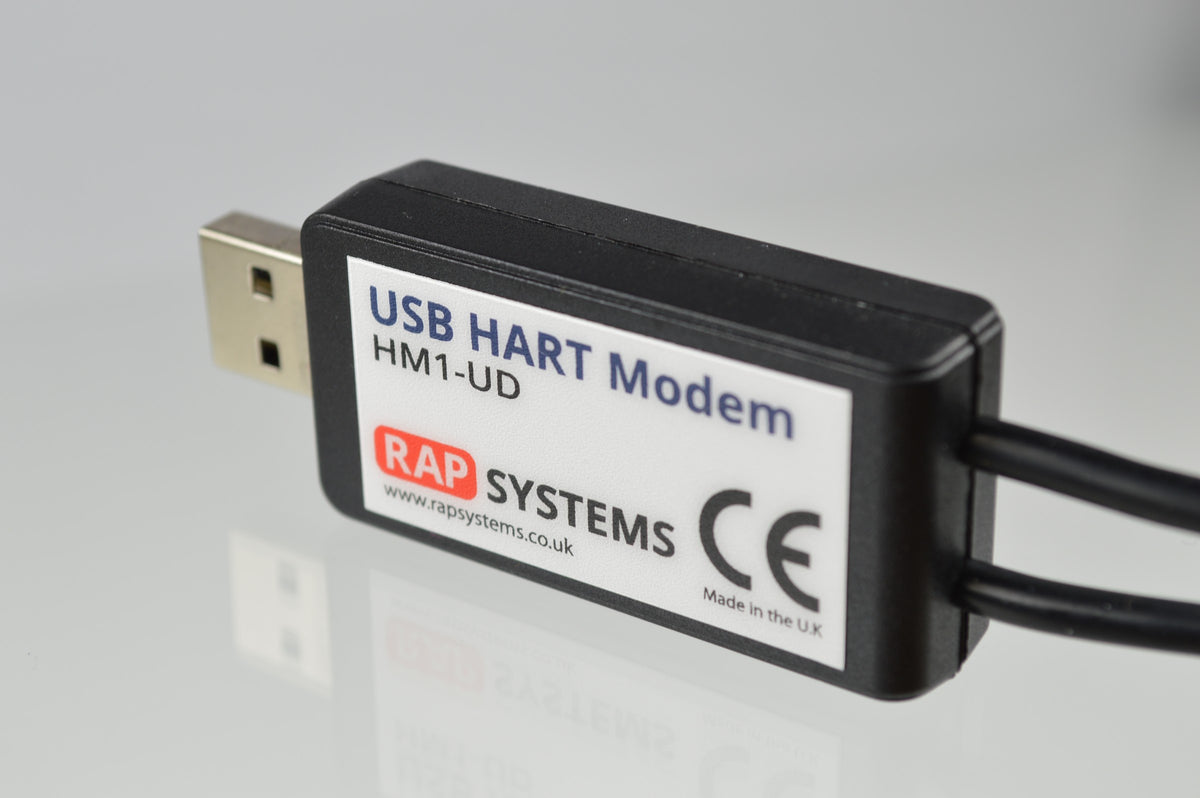
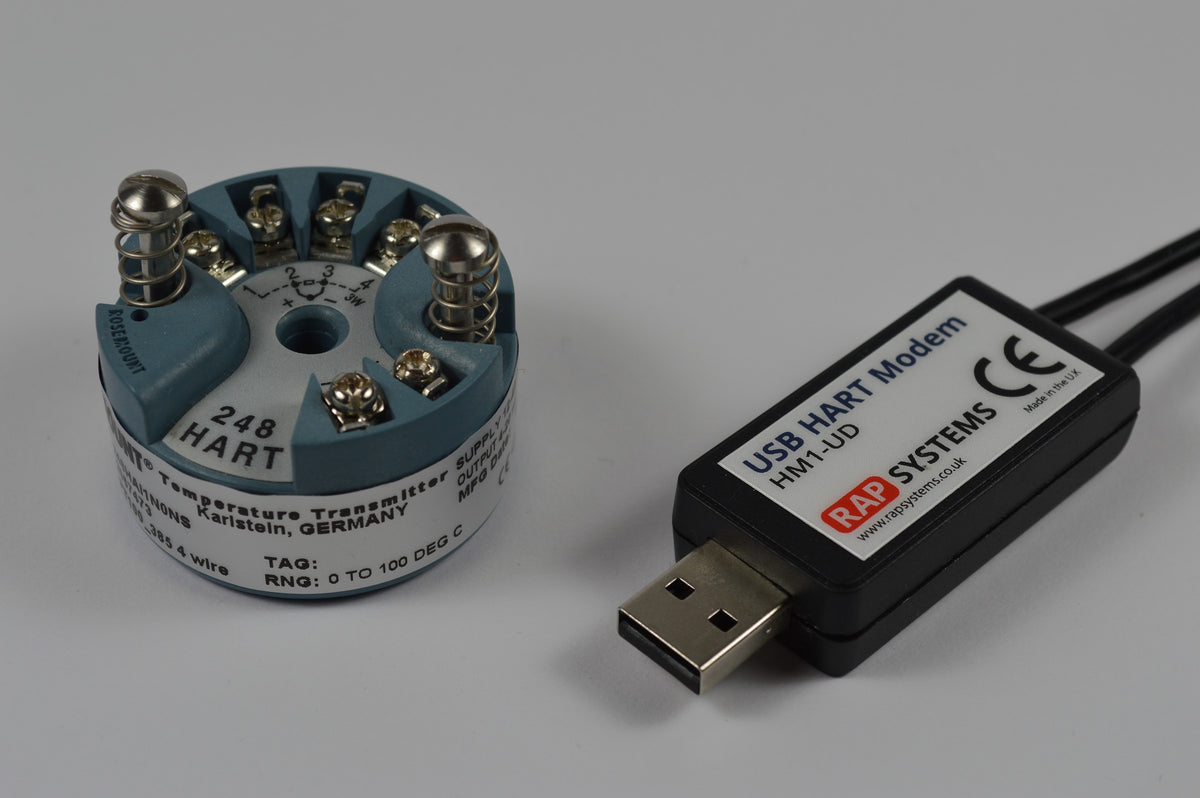
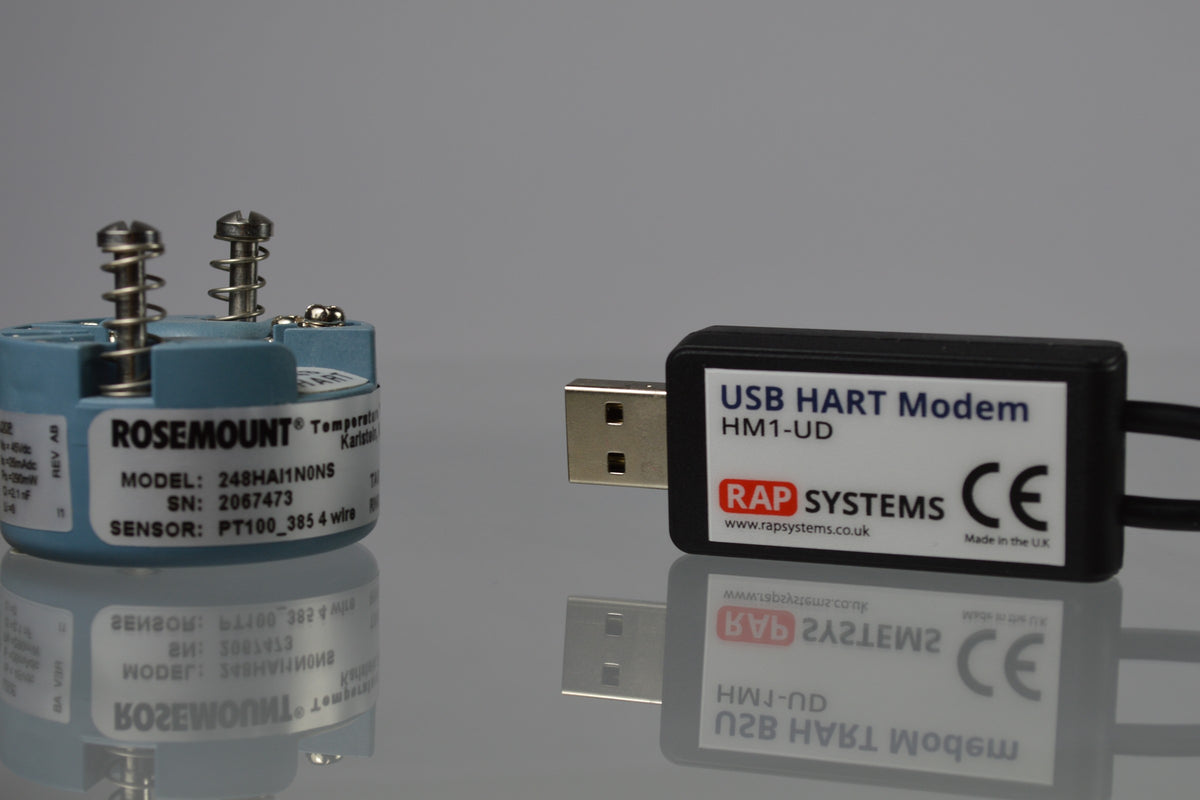
The HM1-UD is a portable USB HART modem that connects a PC or laptop to HART field instruments. Use it with PACTware, FieldCare, FieldMate, SIMATIC PDM or any DTM/DD-based software to configure, calibrate, maintain and diagnose HART devices. It plugs straight into a USB port, needs no separate power supply and no serial port.
Why the HM1-UD
- Works with the tools you already use: the driver creates a standard virtual COM port, so the modem drops straight into PACTware, FieldCare, FieldMate, SIMATIC PDM and other HART device managers.
- USB bus-powered: one connection carries data and power (under 0.25 W). Nothing else to plug in.
- Fully isolated: a 2500 V galvanically isolated loop interface protects your PC, and the connection is polarity-independent.
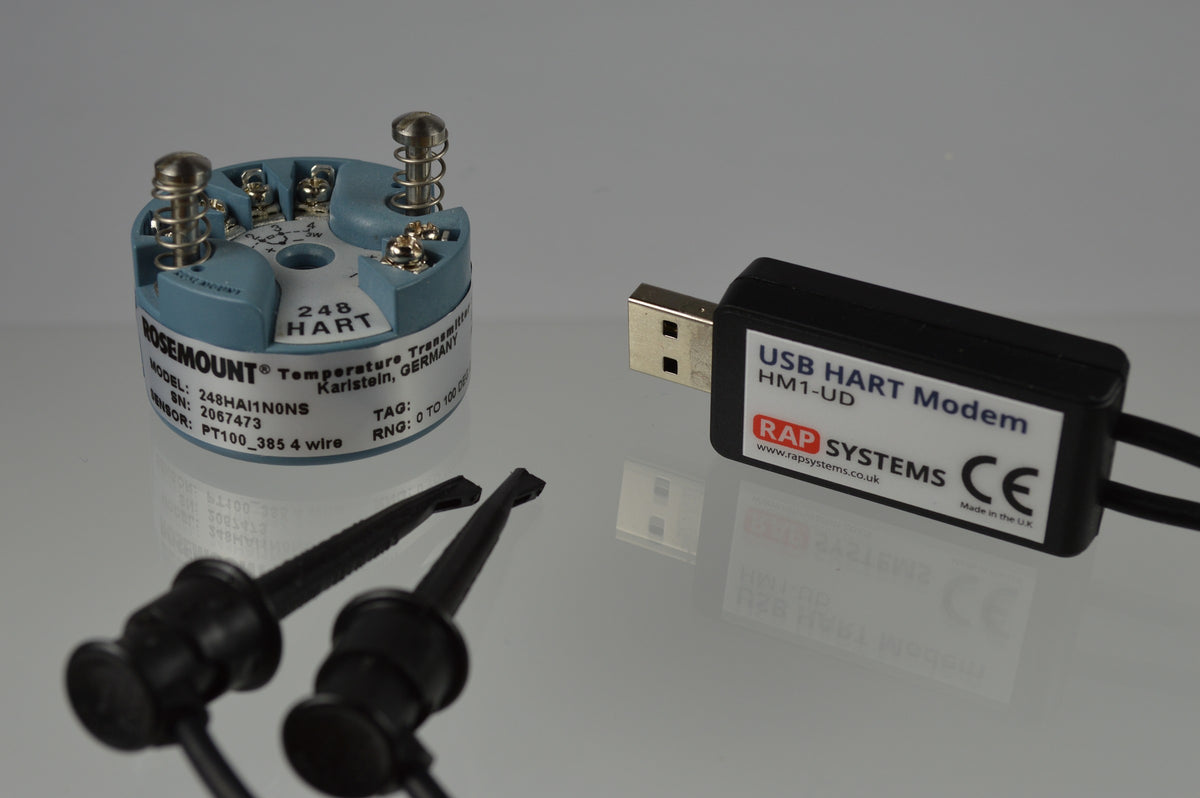
- Truly portable: a compact USB-stick modem with two flexible grabber-clip leads, ideal for the laptop bag, the calibration bench or the field. A USB extension lead can be used for extra reach.
- Point-to-point and multi-drop: acts as a primary or secondary HART master on single-instrument and multi-dropped loops.
What is a USB HART modem?
HART instruments carry digital data on top of their 4–20 mA signal. A USB HART modem converts that signal so a computer can talk to the instrument: read its configuration and diagnostics, change settings and calibrate it. The HM1-UD is a raw modem, so your software handles the HART protocol and the modem passes the signalling through in both directions.
Set up in three steps
- Plug it in. On an internet-connected Windows PC the driver installs automatically. Otherwise download it from our support site. Drivers have also been produced for macOS and Linux; contact support for those.
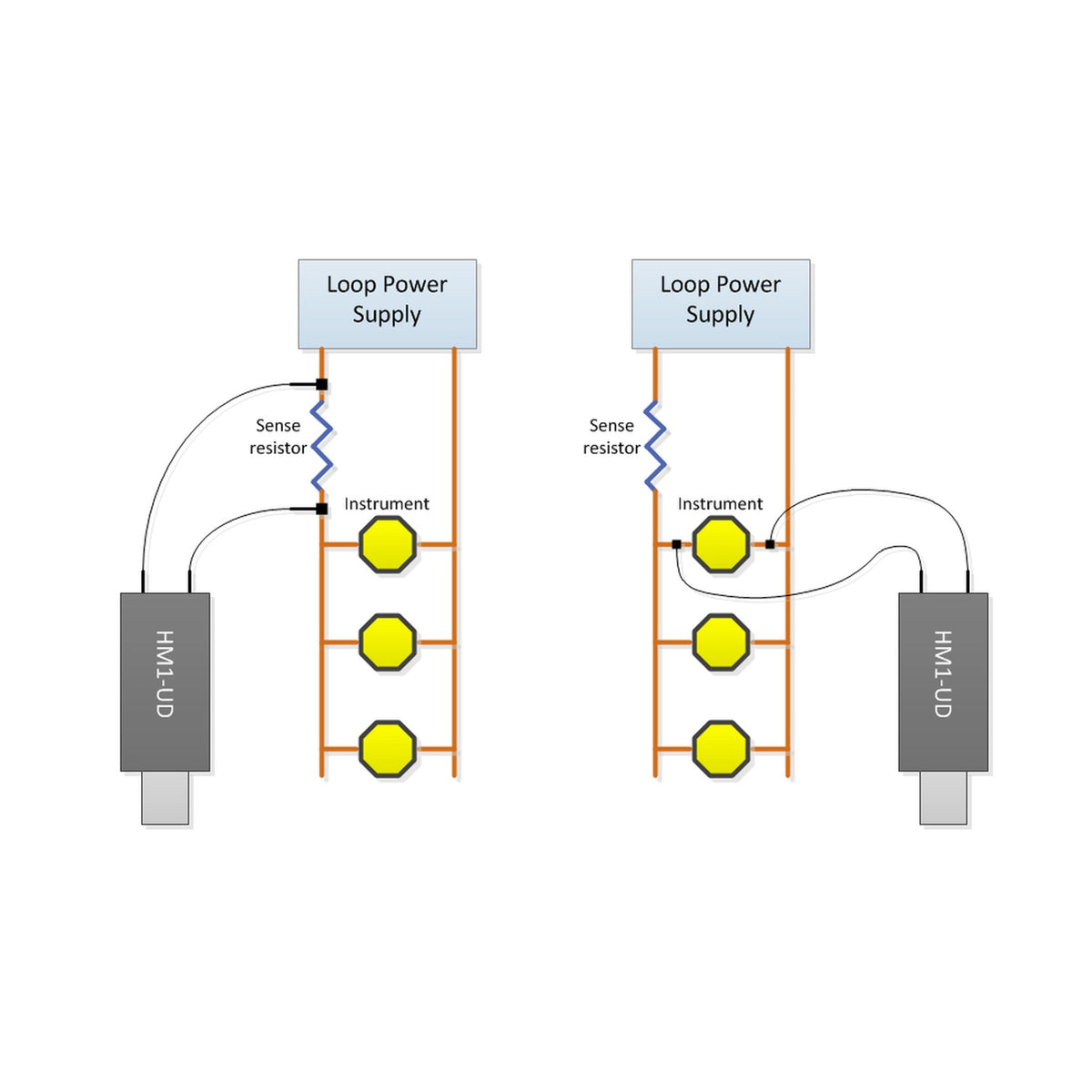
- Clip onto the loop. Connect the two leads across the loop sense resistor or directly across the instrument, either way round. HART needs a loop load of about 250 Ω, which a working 4–20 mA loop normally already has; on the bench, add a resistor.
- Select the COM port in your device-management software and scan. Most tools apply the HART serial settings (1200 baud, 8-O-1) automatically.
Technical specification
| HART interface | 1 channel · primary / secondary master · point-to-point & multi-drop |
| Host interface | USB 2.0 · virtual serial (COM) port via driver · raw modem protocol |
| Loop connection | Two flying leads with grabber clips · polarity-independent |
| Isolation | Fully isolated loop interface · 2500 V dielectric (1 minute) |
| Power | +5 V from the USB port · < 0.25 W |
| Operating temperature | 0 to +50 °C |
| Storage temperature | −20 to +70 °C |
| Humidity | 0 to 70 % non-condensing |
| Software | PACTware, FieldCare, FieldMate, SIMATIC PDM and other DTM/DD-based tools |
Compliance: CE (EN ISO 17050-1:2004) · FCC Part 15 (Class A) · ICES-003.
Frequently asked questions
Does it need an external power supply?
No. It is powered from the USB port.
Do I need a resistor?
Only if there isn't one already. HART needs about 250 Ω in the loop; installed 4–20 mA loops normally have it, bench set-ups often don't.
Will it find devices on a multi-drop loop?
Yes. Point-to-point devices answer at address 0; set your software to scan addresses 1–15 for multi-dropped loops.
Can I use it with my own software?
Yes. It appears as a standard serial port: RTS switches the modem to transmit, and CTS, DSR, DCD and RI indicate a HART carrier on the loop.
In the box
HM1-UD USB HART modem with two flying leads and grabber clips. The driver installs automatically on Windows or can be downloaded from the support site.
Documentation & downloads
Warranty & support
12-month hardware warranty (return-to-base repair or replacement); see our returns & warranty policy. Backed by direct engineering support from the team that designs it.
Share